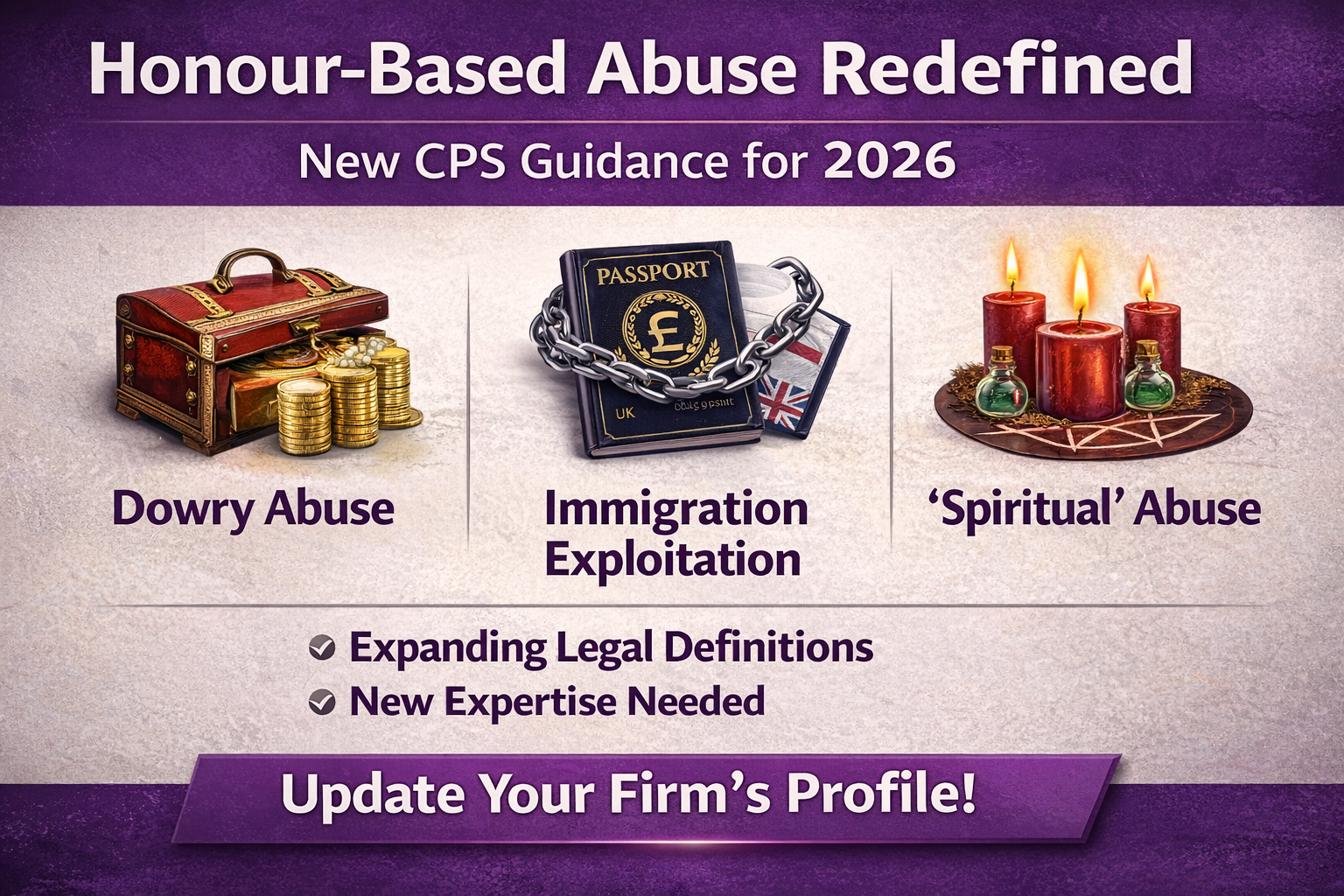
Honour-based abuse is no longer treated as a narrow or culturally specific issue. New guidance released in February 2026 has significantly expanded how these cases are identified, investigated, and prosecuted.
What Has Changed?
The Crown Prosecution Service has updated its guidance to explicitly include:
- Dowry-related abuse
- Immigration-status exploitation
- “Spiritual abuse,” including ritualistic or exorcism-linked harm
This reflects a growing recognition that coercive control can take many forms and that traditional legal frameworks often failed to capture them.
Why This Matters for Solicitors
For family and criminal practitioners, this guidance changes both case strategy and public demand.
Victims, charities, and referrers are now using updated terminology. Search behaviour is already shifting toward phrases like “dowry abuse solicitor” and “spiritual abuse legal help.” Firms that do not reflect this language risk becoming invisible to vulnerable clients seeking urgent support.
Practical Implications for Firms
- Evidence gathering may involve religious, immigration, or community contexts
- Multi-agency working is increasingly common
- Family and criminal crossover cases are more frequent
- Courts are more receptive to broader coercive-control arguments
Specialist knowledge is no longer optional it is expected.
Why Your Online Profile Matters
Clients affected by honour-based abuse rarely search by firm name. They search by problem, often under distress. Firms that clearly signal relevant expertise are more likely to be contacted and trusted.
Claim or update your Legal Means Direct listing to:
- Add new practice-area tags aligned with CPS guidance
- Signal specialist expertise to clients and referrers
- Appear in searches for newly defined abuse categories
👉 You are encouraged to backlink to this article from your firm’s website or resource pages to help educate the public and improve visibility.