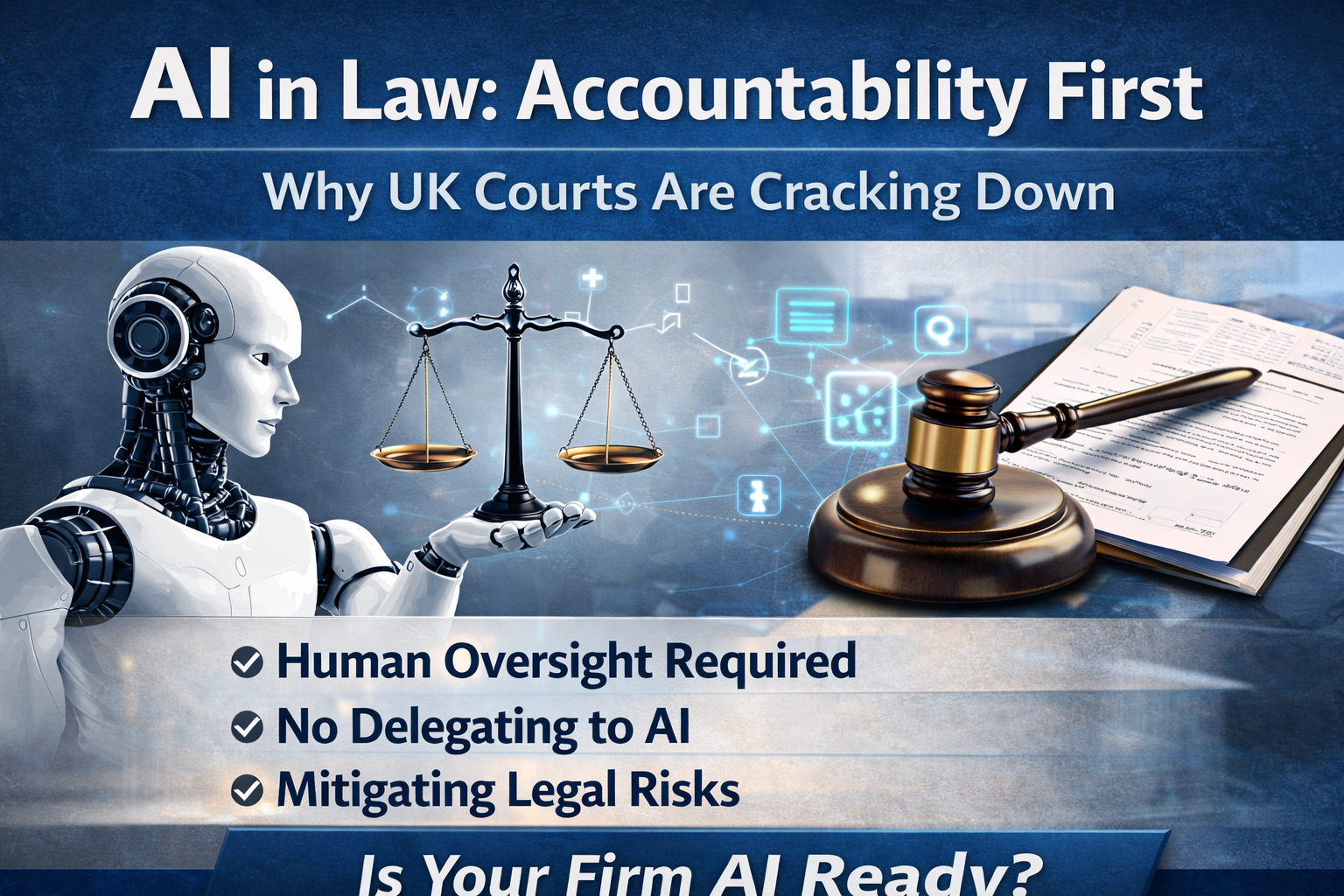
Artificial intelligence is now embedded in legal practice—but regulators and courts are drawing a firm line: accountability remains human.
The Regulatory Mood Has Shifted
Recent judicial commentary and regulatory guidance make it clear that firms cannot blame AI for errors. Whether drafting, summarising, or researching, responsibility sits squarely with the solicitor.
The message is simple: AI may assist, but it cannot decide.
The Rise of “AI Anxiety”
Many firms are struggling to balance:
- Efficiency gains
- Cost pressures
- Professional negligence risk
Prompt errors, hallucinated authorities, and unchecked outputs have already caused reputational damage in several high-profile cases.
What Firms Are Expected to Have
Best practice now includes:
- A written AI usage policy
- Clear rules on review and supervision
- Training on appropriate use cases
- Client transparency where AI materially contributes
Firms without these safeguards risk regulatory scrutiny and client mistrust.
Why Public Signalling Matters
Clients increasingly ask how firms use technology—and whether their data and matters are handled responsibly. Firms that demonstrate awareness and control gain a competitive edge.
Claim your listing on Legal Means Direct to:
- Showcase your firm’s approach to innovation and accountability
- Participate in upcoming polls and insight pieces
- Stay visible as AI regulation evolves
👉 Firms are invited to reference or backlink to this article when publishing their own AI or legal tech policies.